

top pick
NICETOWN Velvet Blackout Curtains 84 Inch
4.5
Starting around $52.95 — check Amazon for current price
Check Price on Amazon →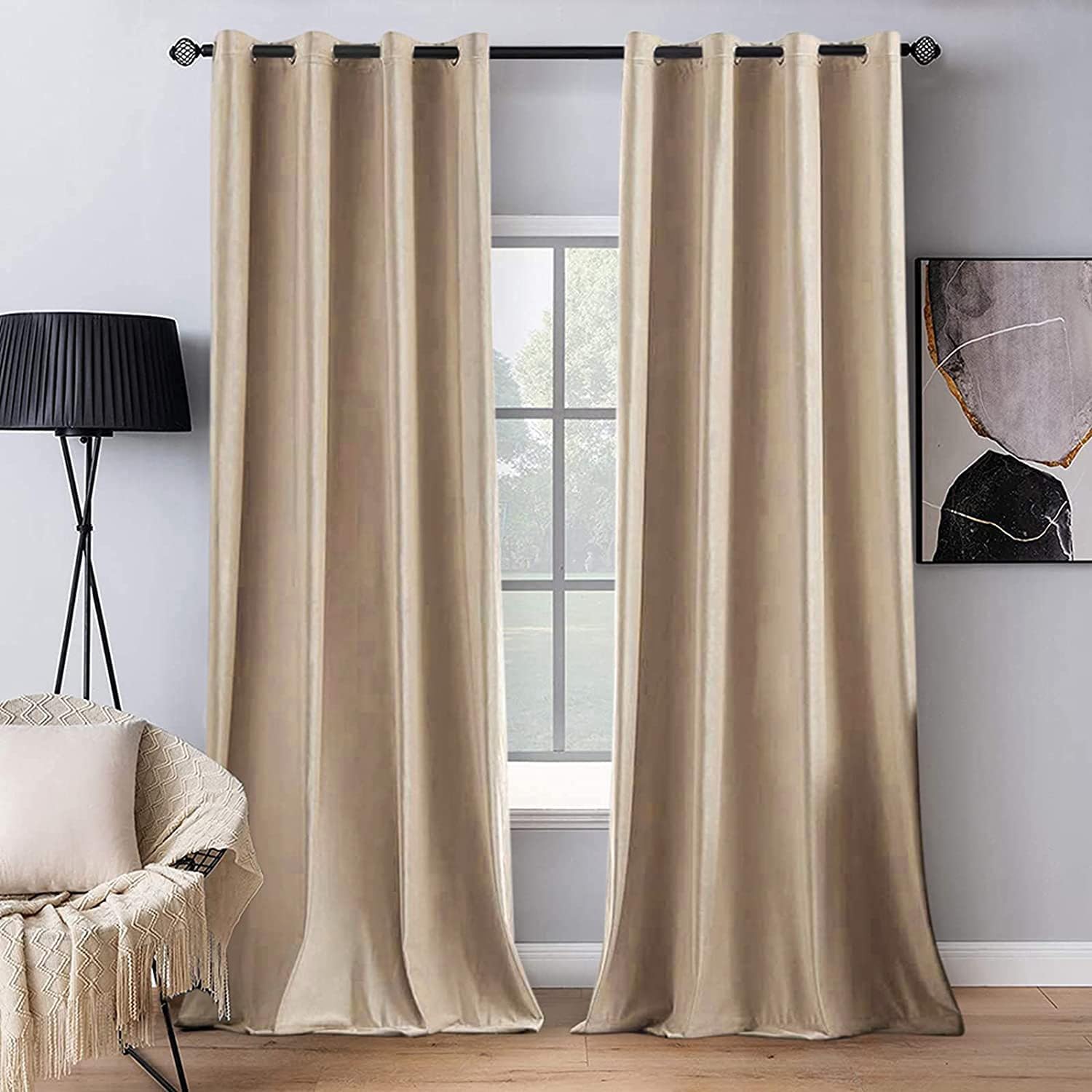
Best curtains under $100—premium velvet, linen blend, and true blackout options that justify the upgrade over budget picks.
Starting around $52.95 — check Amazon for current price
Check Price on Amazon →
Starting around $52.19 — check Amazon for current price
Check Price on Amazon →
Starting around $55.98 — check Amazon for current price
Check Price on Amazon →
Starting around $58.99 — check Amazon for current price
Check Price on Amazon →
Starting around $58.99 — check Amazon for current price
Check Price on Amazon →Most curtain buying decisions end before $50. But there’s a real reason to spend more—and it’s not brand markup or marketing. In the $50–$100 range, you get materials and construction details that genuinely don’t exist at lower price points: true velvet, linen blends with actual natural fiber content, heavy thermal lining that performs measurably better in winter, and design-forward options that would cost three to four times more at a furniture retailer.
This is also the tier where curtains start carrying a room aesthetically rather than just covering a window. The difference is visible.
There are three real justifications for stepping into the $50–$100 tier, and one is probably more relevant to you than the others.
You want velvet. Nothing looks like velvet. The light absorption, the subtle sheen when it catches light at an angle, the way it pools at the floor—these are aesthetic properties that polyester approximations don’t replicate convincingly. Velvet curtains transform living rooms and bedrooms from functional spaces into rooms that look like someone made deliberate choices. In this tier, you can get genuine velvet-finish curtains with blackout backing for $50–$70 a set. At a home goods retailer, the same look costs $200+.
You want real linen texture. Natural and linen-blend panels in this tier have a texture and drape that synthetic linen-look fabrics don’t quite match. The weight is different. The way light filters through is different—warmer, softer. If your room leans into natural materials (wood, rattan, stone, plants), real linen fabric reads as intentional in a way that polyester doesn’t, no matter how good the texture is.
You need serious thermal performance. Premium blackout curtains with multi-layer thermal construction perform meaningfully better at insulation than standard blackout panels. If you have a room that’s cold in winter or hot in summer and you’re looking for a genuine impact on energy bills, the curtains in this tier are worth the investment. Eclipse’s triple-layer construction is tested and documented—not marketing language.
MIULEE Blackout Velvet Curtains — $54.99 for two 52x84-inch panels. This is the top pick in the tier and one of the most reviewed velvet curtain products on Amazon. The velvet finish is substantial—not a thin pile that compresses after washing, but a proper weight fabric with good drape. The blackout backing is effective. Available in over 15 colors including rich jewel tones (deep teal, forest green, burgundy) and neutrals. At 4.5 stars across 15,000+ reviews, the quality consistency is documented at scale.
Lush Decor Prima Velvet Color Block Curtain Panels — $69.99 for a pair. Lush Decor occupies a mid-tier between budget brands and retail brands, and their velvet panels reflect that. The color block design—two tones in a single panel—adds visual interest that solid curtains lack. Available in several combinations that work in contemporary and eclectic interiors. The room-darkening backing provides about 85% light control, which is right for living rooms where you want atmosphere but not complete darkness.
Dreaming Casa Velvet Curtains — $62.99 for two panels with rod pocket and back tab headers. The dual hanging option is useful: rod pocket gives a gathered, traditional look; back tab gives a cleaner, more contemporary silhouette. The velvet quality is comparable to MIULEE at a slight premium for the extra heading option. 8,000+ reviews at 4.4 stars.
MIULEE 100% Blackout Linen Textured Curtains — $57.99 for two panels. These read as natural linen but are engineered for performance—100% blackout, machine washable, grommet header for easy hanging. The texture is convincing: a genuine woven weave that catches light like natural fabric. Available in natural beige, gray, and off-white. The blackout performance makes these genuinely useful in a bedroom context, not just a living room aesthetic choice.
Eclipse Pembroke 100% Blackout Faux Linen Curtains — $59.99 for two grommet panels. Eclipse is one of the few curtain brands whose blackout and thermal claims are backed by actual testing documentation. The Pembroke line uses a triple-layer construction: decorative faux linen face, dense blackout layer, and thermal backer. Light blocking is complete. Noise reduction is measurable. This is the pick if you want maximum functional performance with a premium linen aesthetic. The neutral linen colorway works in almost any room.
Master bedroom. MIULEE velvet or Eclipse Pembroke. Velvet adds the luxury aesthetic most people want in a master bedroom, while Eclipse offers the best sleep-optimized light and thermal performance. Either choice looks like a deliberate design decision rather than a practical purchase.
Living room. MIULEE velvet or Lush Decor Prima color block. The living room is where velvet earns its money—floor-length velvet panels flanking a sofa or a fireplace are a classic look that reads expensive at any budget. The color block options from Lush Decor add contemporary visual interest without requiring a room with strong existing design direction.
Dining room. MIULEE linen textured or Dreaming Casa velvet. Dining rooms benefit from texture that softens the hard surfaces of furniture and flooring. Natural linen tones complement wood dining tables. Velvet in a deep color (navy, forest green) makes a dining room feel intimate and considered.
Home office or study. Eclipse Pembroke for function. The noise reduction and blackout performance makes a meaningful difference in a workspace—less ambient sound, better screen visibility, less thermal variation.
Guest room. MIULEE linen textured or NICETOWN black-liner from the under-$50 tier. Guest rooms benefit from blackout for sleep quality without needing the statement aesthetic of velvet.
Velvet care. Velvet curtains should be spot cleaned or dry cleaned when possible. Machine washing on delicate with cold water is generally fine for the polyester velvet used in these curtains, but tumble drying can affect pile texture—hang dry when practical. Steaming restores the pile if it gets compressed.
Linen care. Linen and linen-blend panels are typically machine washable on gentle cycle. Linen wrinkles, and that’s fine—it’s part of the aesthetic. Light steam removes any unwanted creases.
Ceiling-height hanging. At this price point, installation matters more. These curtains are heavy enough that they need a proper rod with center support brackets for widths over 60 inches. Hang the rod at ceiling height or as high as possible. Floor-length velvet panels that pool slightly at the floor is the premium look—measure for 1–2 inches of floor contact for this effect.
Panel quantity. Most listings in this tier sell in pairs (two panels). For a wide window or a doorway, you may need two sets (four panels). Measure total rod width and plan for 2x coverage: 104 inches of curtain for a 52-inch window.
If you’re comparing a $25 curtain to a $65 curtain and wondering if it’s worth it: the honest answer is that it depends on the room. For a bedroom you sleep in every night, good blackout curtains have a real impact on sleep quality that compounds over years of use. For a living room you host guests in, velvet curtains create an impression that $25 curtains simply cannot. For a cold room with single-pane windows, proper thermal curtains pay back a portion of their cost every winter.
For a bathroom or a closet door? The $25 option is fine.
Buy to the quality level the room actually needs.
Shopping at a different budget?
Quality budget curtains should have decent fabric weight, proper stitching, and achieve their intended purpose (light blocking, privacy, decoration). Look for options with good reviews and reasonable return policies.
Measure from your curtain rod to the floor for length, and measure your window width plus 6-12 inches on each side for the rod width. Multiply rod width by 1.5-2 for proper curtain fullness.
Most budget curtains are machine washable on gentle cycles with cold water. Always check the care label first, and consider hang-drying to extend the curtains' lifespan.